WINGS
The desire to leave the ground
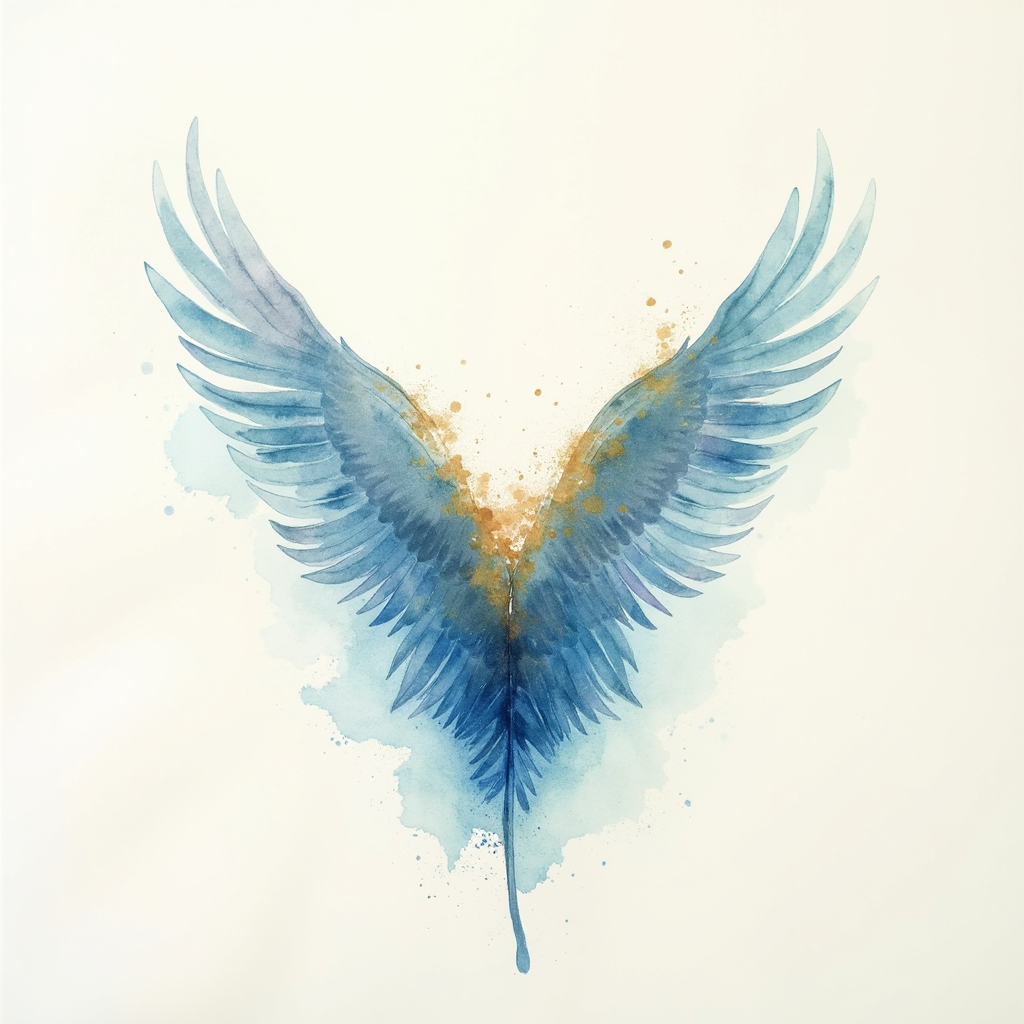
Wings are among the most enduring images in the history of symbols.
They appear in mythology, religious art, royal emblems, funerary rites, and popular culture. Add wings to a figure, and it immediately seems capable of moving beyond the familiar limits of the ground.
Freedom is the most immediate meaning. Flight, however, also demands balance, direction, endurance, and the ability to adapt to an environment the body was never built to inhabit.
Once the ground falls away, the world remains where it was, but the position from which it is seen has changed. Wings evoke the desire to rise beyond restraint while reminding us that height carries its own laws and forms of weight.
The freedom of wings has never been entirely without conditions.
Wings in ancient traditions
Across many ancient cultures, wings appear on gods, messengers, guardian beings, and figures who stand between different realms of existence.
In ancient Egypt, Isis and Ma’at were often depicted with outstretched wings. The image carried associations of protection, shelter, and the preservation of order.
In Mesopotamian art, winged beings often stood near palace gates or sacred spaces. They guarded the boundary between places open to human passage and regions of power that required protection.
In Greek mythology, Hermes wore winged sandals, while Nike was associated with the wings of victory. Wings expressed speed, movement, the carrying of messages, and the ability to cross distances beyond ordinary human reach.
In Christian and Persian art, angels and other winged beings often served as messengers, protectors, or intermediaries between heaven and earth.
Each tradition gave wings a story of its own. Across these different settings, they often marked the ability to cross boundaries, carry messages, offer protection, or observe from a wider position.
Seeing the ground from a distance
In symbolic language, wings are easily reduced to images of freedom and escape.
Leaving a place does not always release us from what held us there. A person may move to another city, leave a relationship, or enter an entirely different life while carrying the same fear, confusion, and old restraints within them.
Wings also suggest the ability to change one’s point of view.
Close to the ground, we see only the part of the landscape directly before us. Obstacles can appear enormous, a crack may resemble the end of the road, and the disorder ahead may seem to cover the entire world.
With greater distance, the same terrain begins to look different. The wall that seemed like a dead end may be only a short section; the apparent chaos may belong to a wider structure that could not be seen from below.
Rising creates room to step back. That distance does not remove the difficulty, but it allows the larger picture to come into view.
Sometimes wings matter because they give us enough distance to understand the world we are still living in.
The cost of flying too soon
Wings can also become a source of danger.
In Greek mythology, the story of Icarus offers a clear warning about taking flight before understanding one’s limits.
Icarus has wings, yet he fails to keep a safe distance from the sun. The wax melts, the wings break apart, and the flight becomes a fall.
The story gives wings a harsher meaning. The desire to rise needs structure, rhythm, direction, and awareness.
Some people try to leave an old life too quickly, escaping its restraints before the body and mind have developed the strength to adapt. When urgency moves faster than one’s sense of direction, height becomes dangerous.
Flying high does not prove that the person flying has matured. Sometimes maturity begins with recognizing that the moment for take-off has not yet arrived.
Wings in modern life
Today, wings appear on logos, tattoos, clothing, book covers, music posters, games, and films.
They are often associated with freedom, lightness, inspiration, protection, or the desire to rise beyond ordinary life. A pair of wings behind a figure can instantly make that figure appear elevated, transformed, and removed from the ground.
Familiarity can also flatten the symbol into a slogan: rise, be free, escape every limit.
Real life is more complicated. Some limits need to be crossed. Others need to be understood before they are crossed. Certain limits belong to living conditions and social structures that personal willpower cannot simply erase.
Wings therefore carry questions of direction, strength, and balance. The desire to leave becomes dangerous when the person flying does not know what they are leaving behind or where they intend to land.
A TWOR reading
TWOR reads wings as the ability to create distance from a position that has narrowed and confined one’s view.
Some stages of life pull a person close to the ground. Details, reactions, fear, pressure, and repeated stories about the self begin to occupy the entire field of vision. In such moments, complete escape may offer less help than gaining enough height to see the whole situation again.
Wings provide that distance.
A person who “grows wings” still carries memory, responsibility, limitations, and old wounds. They simply no longer see everything from the exact place where they were once held.
Growing wings does not erase gravity. The person in flight learns how to work with it: which weight must still be carried, which can be set down, and when it is time to return to the ground.
The freedom carried by wings comes through seeing more widely, moving with greater awareness, and knowing when to fly and when to descend.
Does the desire to rise come from a readiness to widen our view, or from not yet knowing how to remain beside the weight we carry?
If we are truly lifted, will we use that height to escape the world, or to understand it more clearly?
_______