PHOENIX
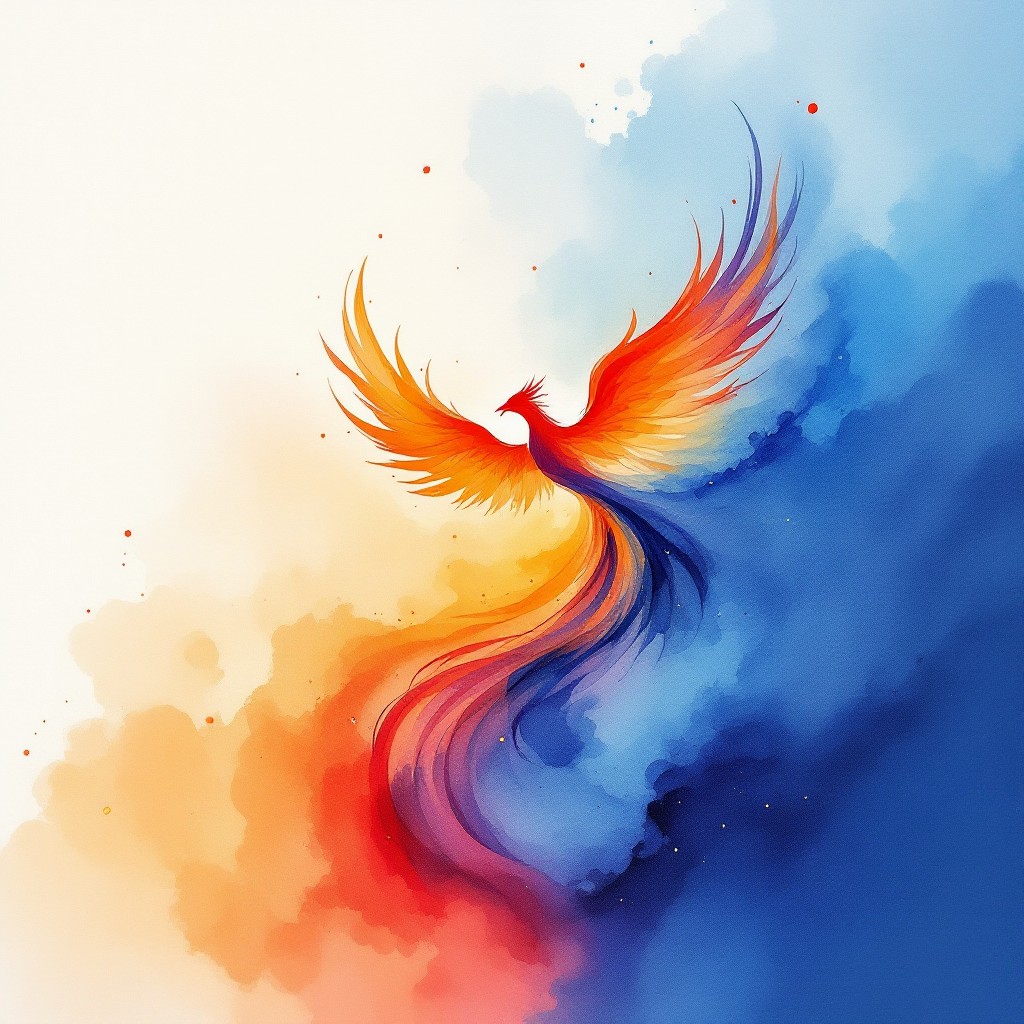
Does what returns from the ashes remain the same?
The phoenix is usually remembered as a bird that enters the fire, turns to ash, and rises again from what remains.
The image carries such force because its return begins with a complete ending. No young shoot grows beside the old trunk, and no descendant takes its place. The bird must pass through fire, lose its former shape, and appear again.
What emerges from the ashes still carries traces of its previous life, though it now exists in another form.
One image, many traditions
Sacred birds associated with the sun, long life, good fortune, and renewal appear across many cultures. Their visual similarities often lead people to group them under the name phoenix, even when their origins and roles differ greatly.
In Greek and Roman accounts, the phoenix is the only bird of its kind. It lives for an extraordinary span of time before dying and being born again. Later versions placed greater emphasis on fire, ashes, and the bird’s return from its own burned remains.
The Egyptian Bennu was connected with the sun, creation, and the recurring renewal of the world. It influenced later stories of the phoenix while retaining its own place within Egyptian belief.
The Simurgh of Iranian tradition is commonly associated with wisdom, protection, and healing. The Chinese Fenghuang represents good fortune, virtue, order, and harmony.
These birds share an existence beyond the ordinary limits of animal life. Each tradition placed something different within their wings: longevity, renewal, wisdom, authority, or the return of order to the world.
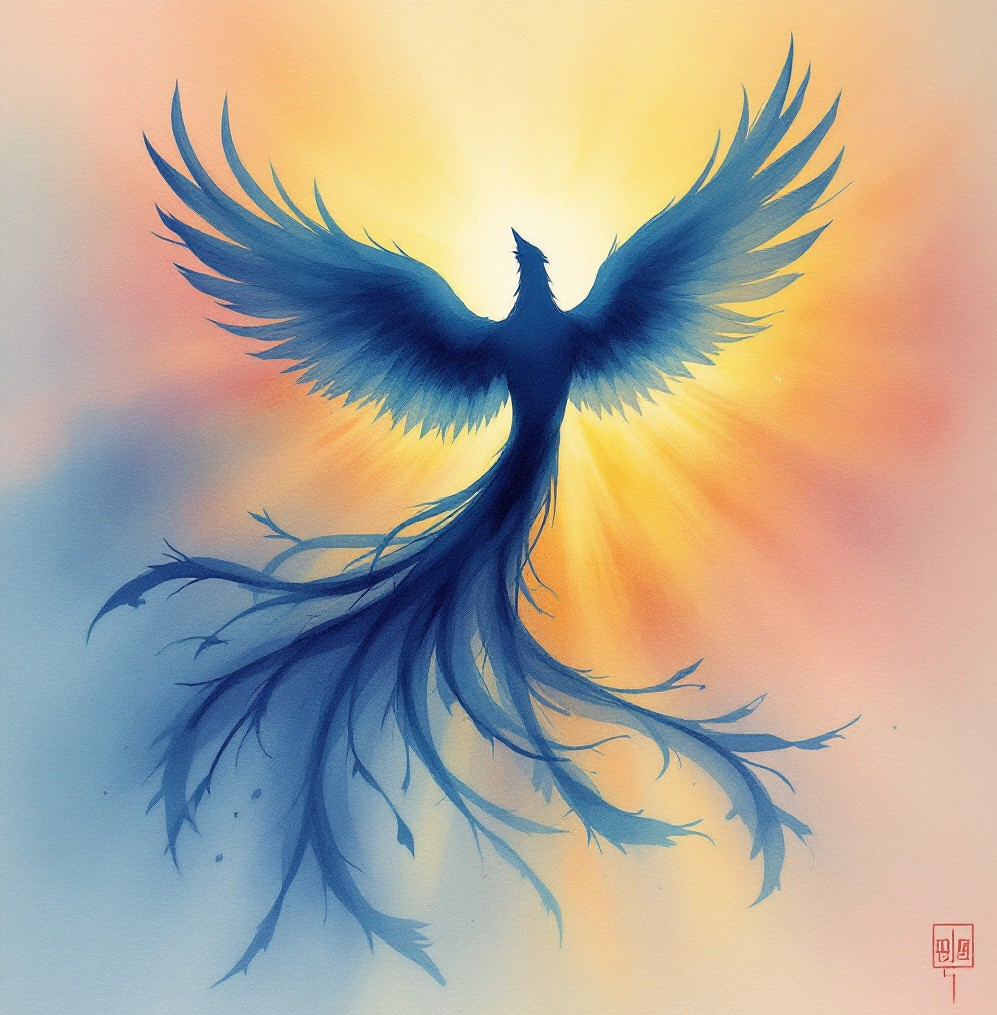
Fire destroys and filters
In the story of the phoenix, fire performs two roles at once. It destroys the former shape and separates what can continue from what has reached its end.
The flames do not restore the bird intact. They consume an entire life cycle, leaving existence to continue from what remains.
Ash holds a distinctive place within this symbol. It marks the death of the old form while becoming the first substance of the next. The past has ended, yet it has not vanished. It lies beneath the new form as its foundation.
Here the phoenix differs from many other images of renewal. New life does not appear somewhere beyond the destruction. It emerges from the same place where the destruction occurred.
Rebirth after rupture
Rebirth is often imagined as recovery: what was lost returns, the wound closes, and life resumes its former course.
The phoenix follows another path. Once the old form has burned away, its return cannot be an untouched copy of what existed before.
Human lives often change in a similar way after a major loss. People continue living, though the ways they trust, attach, choose, and protect themselves may no longer be the same. A response that once kept someone safe can later become a burden. A desire that once occupied nearly everything may lose its hold after a life-altering event.
A thread still connects the present to the former life, but the person moves forward through a different structure.
When change begins with what falls away
Modern culture often describes growth through accumulation: learning more, doing more, becoming stronger, gaining skill, and collecting experience.
For the phoenix, a new life cycle begins only after the former shape has burned away.
A role has run its course. A belief can no longer support the life built around it. A form of self-protection that once helped someone survive now keeps them trapped. The fire does not add new qualities to the old form. It strips pieces away until that form no longer exists.
Loss does not automatically produce renewal. Many ruptures leave pain, confusion, or an emptiness that lasts for years. The phoenix enters the story where one life cycle has closed and the current of life has yet to stop.
Change begins with what can no longer remain.
The solitude of the phoenix
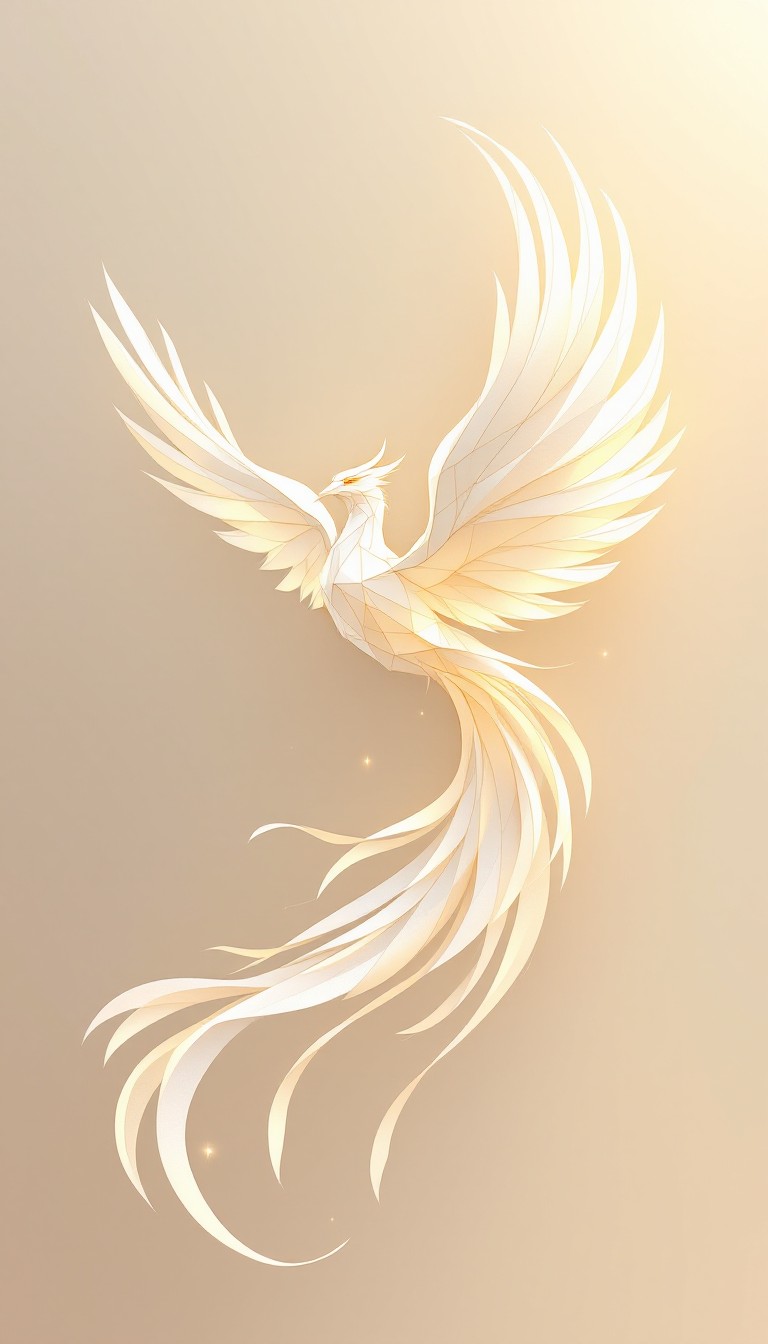
The phoenix is usually portrayed alone.
It does not continue its species through reproduction, nor does it pass its life cycle to a younger generation. The bird completes the cycle itself, enters the fire alone, and returns from its own ashes.
This detail brings the phoenix close to transformations that take place within a single person. Others may witness the process, offer support, or wait nearby, but some passages cannot be crossed on another person’s behalf. Only the one living through them can recognise what has completed its role and what still carries enough life to continue.
The solitude of the phoenix is also easy to romanticise. Healing often depends on connection, care, and the willingness to accept help. Support from others still cannot replace the recognition that must occur within.
The phoenix returns alone because the cycle belongs to it.
The phoenix in modern culture
Today, the phoenix appears in books, films, games, tattoos, logos, city names, sports teams, and countless stories about surviving crisis.
Its appeal is easy to understand. The phoenix gives visible form to an experience that can be difficult to name: one part of life has ended, yet the person left behind must still find a way to continue. Ash gives loss a shape, while the wings introduce the possibility of another form.
Modern retellings often compress the phoenix into a spectacular comeback. The phrase rise from the ashes can turn a long process into a sudden leap, as though determination alone could immediately transform every burn into a pair of wings.
Stories frequently cut straight from collapse to triumph. The period between them receives far less attention: the old life has disappeared, while the new form has not yet emerged.
The phoenix needs that interval. Without it, the ashes become little more than scenery.
What the phoenix carries forward
The phoenix is widely read as a symbol of rebirth. TWOR looks further into the continuity of identity within the story.
When shape, role, and way of existing have all changed, what connects the bird inside the fire to the bird that rises from the ashes?
The ashes confirm that the former shape once existed and completed its life cycle. The returning bird does not go back to the past. It carries the past into another way of being.
The distance between those two forms gives the phoenix its weight. What returns still belongs to the same story, yet it no longer has to live within the old structure.
Had everything remained intact, the phoenix would never have needed the fire.
References:
- Encyclopaedia Britannica — Phoenix
- Encyclopaedia Iranica — Simurgh / Simorgh
- Encyclopaedia Britannica — Fenghuang
🐦🔥 Back