DNA
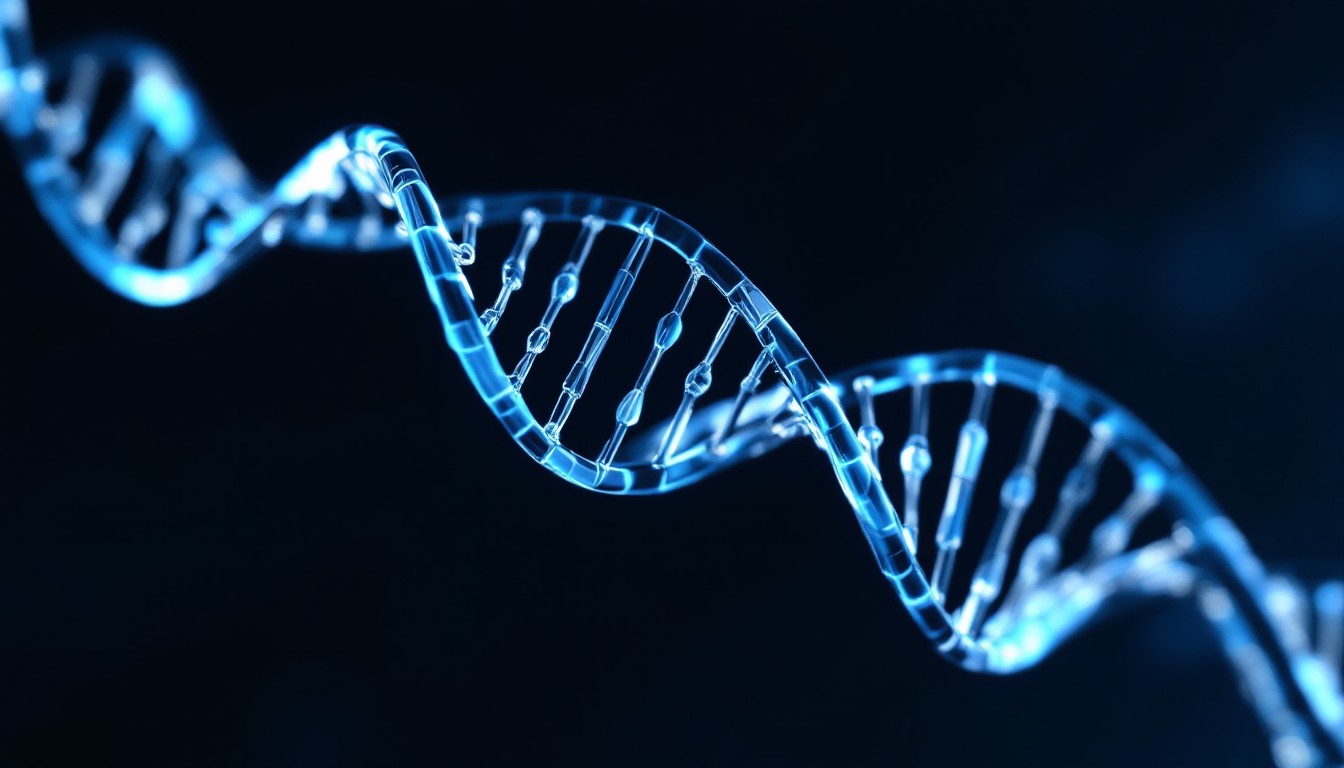
When life carries information in a spiral
DNA is one of the most familiar scientific images of the modern age. The sight of two strands twisting around each other immediately brings to mind genes, inheritance, ancestry, the human body, and what passes from one generation to the next.
Its scientific structure is precise, yet the shape carries a strong visual pull. Two strands run along the same axis, joined by paired bases that resemble the rungs of a narrow ladder. The whole structure feels ordered and in motion at once.
From a molecule inside living cells, DNA gradually became an image of origin, continuity, and the capacity of life to change.
From Molecule to Symbol
At the biological level, DNA carries genetic information used in the formation, development, and functioning of an organism. That information is held in the sequence of its bases, copied when cells divide, and passed on through reproduction.
DNA works within a living system that also includes cells, RNA, proteins, and many forms of biological regulation. It does not operate alone as a self-running set of instructions.
From the mid-twentieth century onward, the double helix spread through textbooks, laboratories, medicine, and popular media. Its shape soon moved beyond biology and became a visual sign for life, inheritance, identity, and human origin.
Its popularity also encouraged an overly simple reading. DNA is often treated as a fixed blueprint for a person, while genes are used to explain nearly every feature of the body and every direction a life may take.
Biology is far less rigid than that image suggests.
The double helix: two strands, one structure
DNA consists of two strands running in opposite directions around the same axis. Paired bases connect them and hold the structure together.
During replication, each strand can serve as a template for the formation of its matching partner. This arrangement allows genetic information to be copied with high accuracy as cells divide.
As a symbol, DNA draws much of its power from both the spiral and the relationship between the two strands. The sequence must be preserved. The bonds must remain stable enough to hold. At the same time, the structure continues to open, copy, and function inside a living body.
The double helix is often used to evoke paired forces within life: the individual and the lineage, past and present, stability and adaptation, copying and variation.
Those forces do not belong separately to one strand or the other. They emerge through the way the whole structure operates across time.
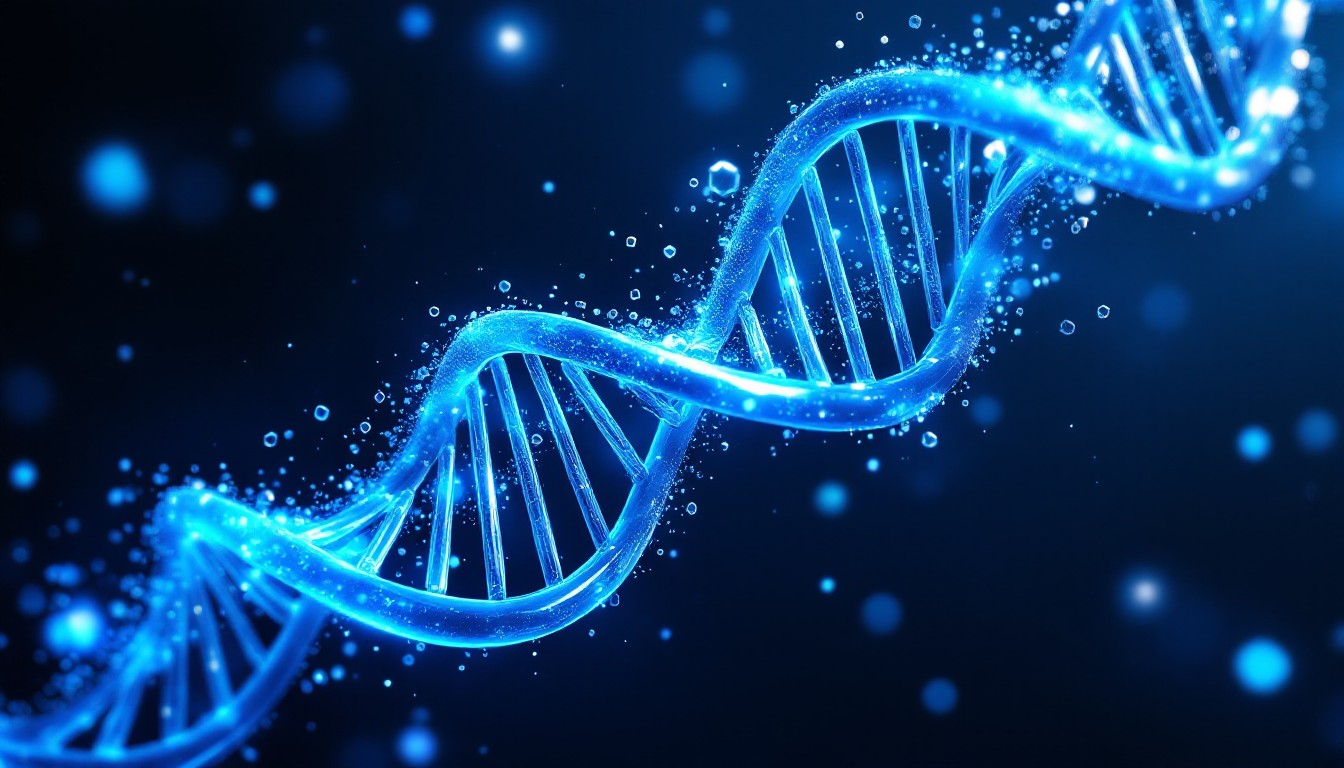
Inheritance Does Not Write an Entire Life in Advance
DNA is often described as the “blueprint” of a human being. The image is easy to grasp, though it can make life appear more fixed than it is.
Genes can influence body shape, metabolism, immune responses, certain biological traits, and the likelihood of developing some illnesses. A living body is also shaped by development, nutrition, environment, care, living conditions, and many unpredictable events.
The same genetic information may be used differently depending on the type of cell and the biological conditions around it. Environmental factors can also affect the activity of certain genes without rewriting the entire DNA sequence.
Each person receives genetic material from those who came before, yet that material is recombined within a body that has never existed before.
DNA creates tendencies, limits, and possibilities. The rest continues to take shape as the body lives in the world.
Biological memory and the continuing line
DNA makes ancestry feel concrete.
Facial features, bone structure, eye colour, metabolism, and certain strengths or vulnerabilities may reappear across generations. A child may carry the features of someone they never met. A body in the present can still bear traces that travelled through a family line for centuries.
This is memory in a biological sense: information maintained within living matter and passed on through reproduction.
DNA does not preserve an ancestor’s memories as images, emotions, or stories. Those belong to personal memory, family culture, oral tradition, and recorded history.
What DNA carries through time is biological continuity. That alone is remarkable: a structure too small to be seen with the naked eye can cross generations and appear again within the body of someone new.
Change as part of continuation
DNA is copied with extraordinary accuracy, though the process is never completely error-free. Differences may appear during replication or through damage caused by processes inside and outside the body.
Many of these differences have little visible effect. Some are harmful. A small number, under particular conditions, may contribute to new forms of adaptation.
Such variations provide material for natural selection and evolutionary change across generations.
Life depends on both stability and room for difference. Most genetic information must be preserved accurately enough for bodies to form and function. Rare variations can open the way for new traits to emerge.
The symbolic weight of DNA gathers here: life keeps its connection to the past without having to reproduce the past intact.
DNA in modern life
The double helix now appears far beyond the laboratory. It is used in biotechnology logos, medical design, film, art, tattoos, brand identities, and content about ancestry, health, or personal identity.
A single blue spiral can instantly suggest science, modernity, and life itself.
That convenience also makes DNA easy to misuse. It is attached to ideas about “codes,” “energy,” “frequency,” “awakening,” “activation,” or the “true self,” even when the subject has little connection to biology.
Once a symbol can be made to represent anything, its shape may remain while its meaning becomes increasingly hollow.
DNA can support many reflections on ancestry, identity, continuity, and change. Its anchor remains biological: a material structure carrying genetic information within living bodies.
When the body carries a history longer than memory
Personal memory covers only part of a lifetime. DNA connects the present body to a line of life stretching much further back.
Each person is an individual, yet also a continuation of bodies that existed before them. Genetic material passes through generations, recombines, appears under new conditions, and may continue onward.
The body turns inheritance into something visible and tangible. Origin no longer belongs only to family trees, surnames, or inherited stories. It is present in living matter, in the way a body forms, and in traits received before a person is able to choose anything for themselves.
Across each generation, genetic material is combined in a new way and expressed under different conditions of life. Traces of the past remain present in the current body before passing onward again.
_______
🧬 Back