EYE OF HORUS
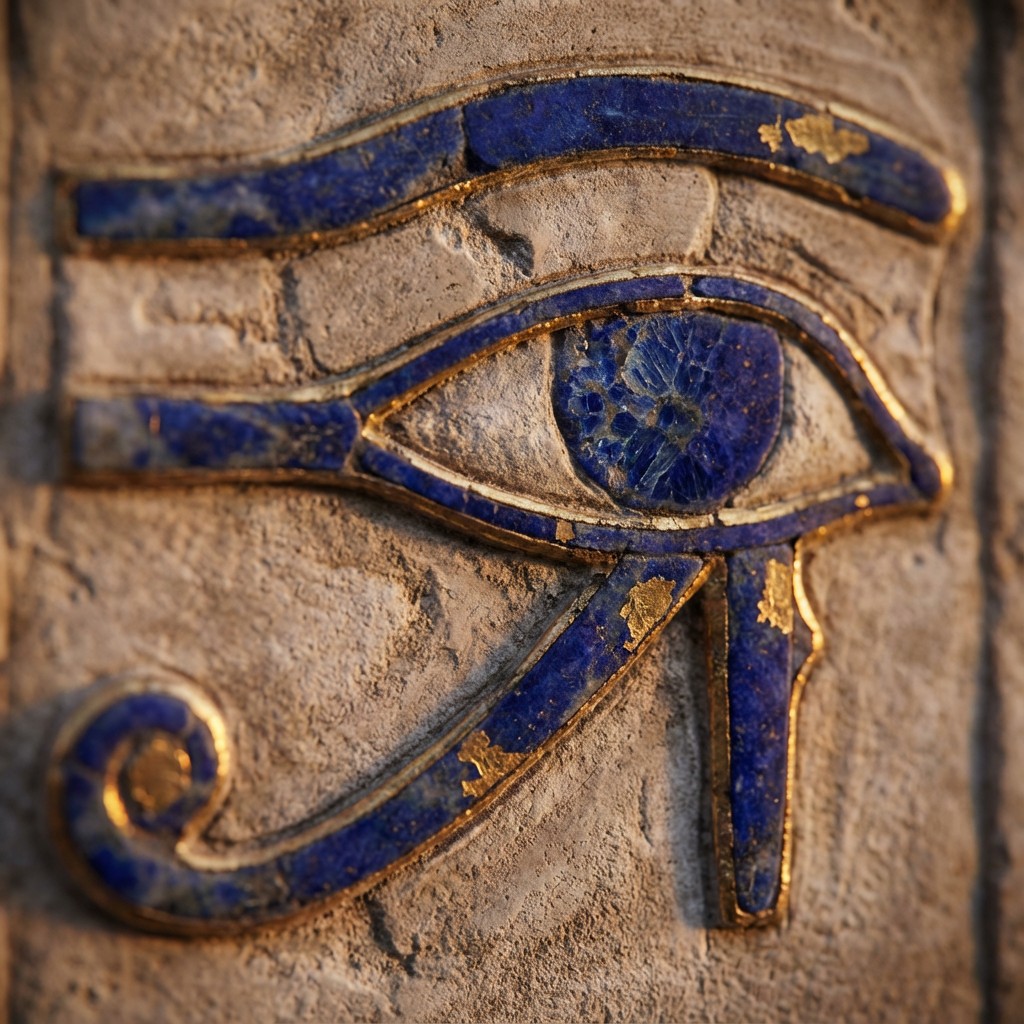
Vision restored after injury
The Eye of Horus is often remembered as a symbol of protection, insight, or hidden knowledge.
Long before it became widely recognized in modern culture, however, it belonged to a story of conflict, loss, and restoration.
In Egyptian mythology, Horus is associated with the sky, kingship, and rightful succession. His struggle with Set follows the death of Osiris and centres on the restoration of order after disruption.
In some versions of the myth, Horus loses or damages one of his eyes during the conflict. It is later restored, often through the intervention of Thoth. From a part of the body that had once been torn apart, the eye becomes a sign that what has been broken may also be made whole again.
The power of the Eye of Horus begins with that history. It is the vision of something that has lost part of itself before learning to see again.
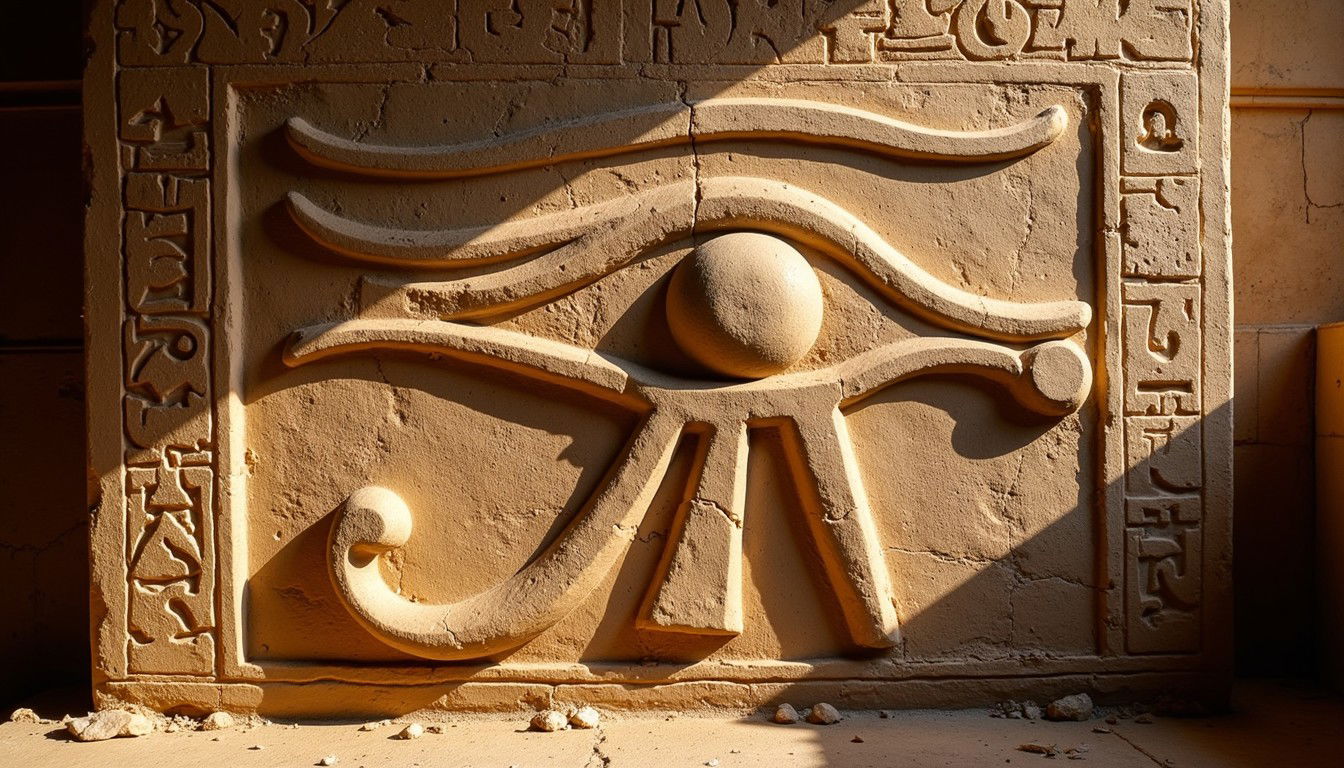
Udjat and the meaning of wholeness
In ancient Egyptian, the Eye of Horus is commonly known as the Wedjat or Udjat, a name associated with soundness, wholeness, and restoration.
Its wholeness is not untouched perfection. It carries the memory of something once divided and later brought back together.
For this reason, the Eye of Horus appeared on amulets, jewellery, ritual objects, and items connected with the journey after death. In Egyptian funerary contexts, it could signify protection, preservation, and guidance through dangerous transitions.
Its strength lies in the possibility of restoring integrity. What has been torn, fractured, or lost may still be joined together, even if the final form no longer matches what existed before.
Life continues because its parts are still able to remain together.
The eye, its parts, and the missing fraction
The Eye of Horus is also associated with fractions used in the Egyptian system of measurement.
In the most familiar presentation, different parts of the eye correspond to values such as 1/2, 1/4, 1/8, 1/16, 1/32, and 1/64. Together, they add up to 63/64.
The missing fraction has been interpreted in many ways. Some see it as the trace of a whole that never fully closes. Others associate it with divine intervention or with a limit that human calculation alone cannot overcome.
These interpretations are best understood as symbolic rather than literal. In ancient Egypt, image, ritual, measurement, and ideas of order often stood alongside one another, but that does not mean the Eye of Horus was intended as a coded map of the universe.
The fraction nevertheless leaves behind a compelling image: a whole may be divided into many parts and nearly restored, while a very small gap still remains.
Human life often unfolds within that remaining fraction.
Vision after breaking
The meaning of the Eye of Horus reaches beyond the act of seeing.
An eye that has never been wounded experiences the world in one way. An eye that has been broken and restored sees through the memory of that fracture.
After injury, vision loses part of its original innocence. It knows that bodies can be divided, order can collapse, and things once believed to be permanent may fall apart.
That experience creates another kind of understanding.
People rarely return from deep loss with exactly the same eyes. The same room, the same words, the same relationship, or the same memory may still exist, yet the way they are received has changed.
Some things become visible only after a part of ourselves has once been lost.
The Eye of Horus therefore suggests the ability to see the world again from the knowledge that wholeness can break.
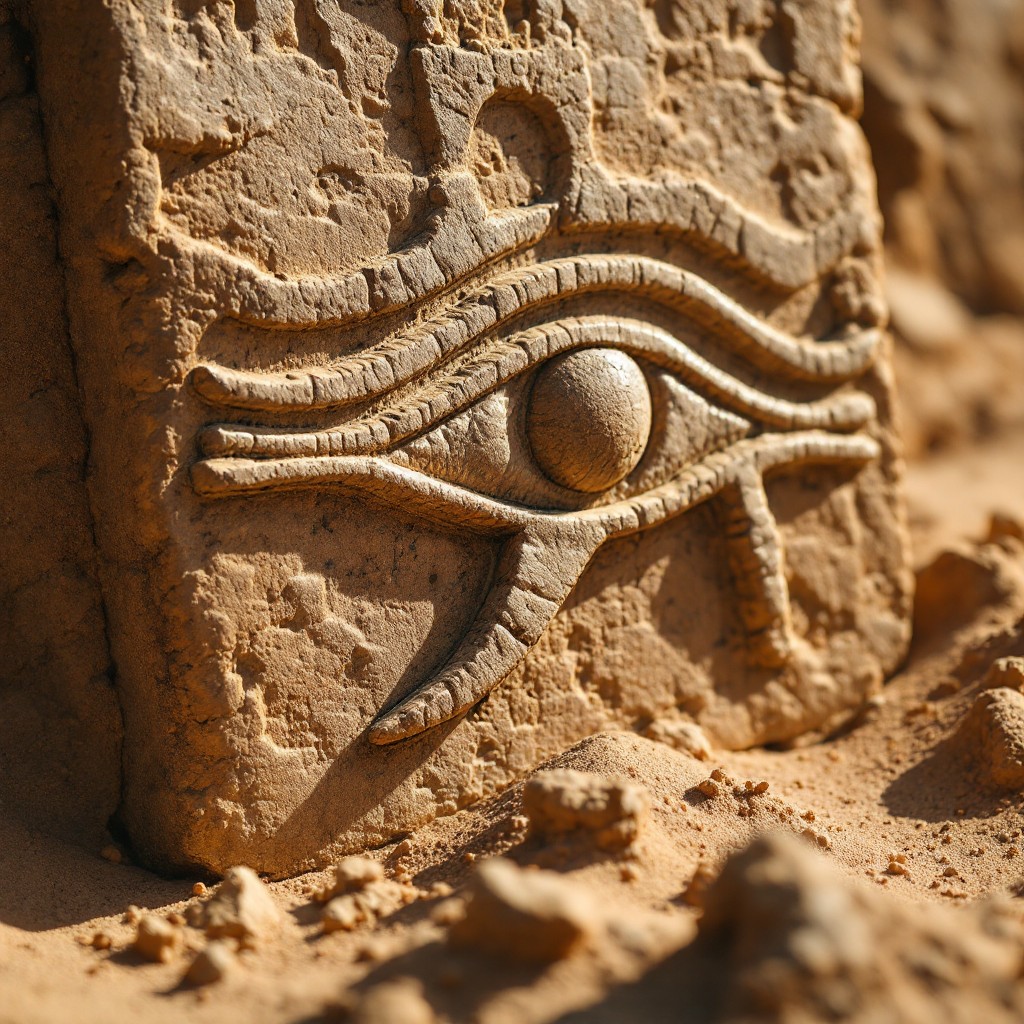
Between protection and surveillance
In modern culture, the Eye of Horus is often blended with the all-seeing eye, the Eye of Providence, symbols of secret power, conspiracy theories, the Illuminati, or the so-called third eye.
Symbols accumulate new associations as they move across cultures and periods. When every image of an eye is treated as the same symbol, the Eye of Horus easily loses the ground from which it came.
The eye above the pyramid belongs to a different historical tradition. The Eye of Horus should not be reduced to a sign of surveillance, manipulation, or hidden authority.
Within its Egyptian context, it stands much closer to protection, healing, and restoration than to the gaze of an invisible power watching from above.
A watching eye makes people feel observed.
A protective eye suggests that what is beginning to fall apart is still being held together.
The Eye of Horus belongs more naturally to the second meaning.
A TWOR Reading
In the TWOR reading, the Eye of Horus is the image of vision that has passed through injury.
There are moments in life that permanently alter the way we receive the world. Our biological eyes remain the same, yet our sense of trust, safety, and danger no longer works as it once did.
After collapse, small warning signs may become easier to notice. After loss, we recognise the fragility hidden inside things we once believed were secure. After recovery, we begin to understand that wholeness does not necessarily mean never having been wounded.
The Eye of Horus points toward another kind of wholeness: wholeness after discovering that we can break.
It does not deny injury, nor does it turn suffering into a required path toward growth. Some wounds leave only loss. Some recoveries still carry absence and the memory of fracture.
The vision that returns is therefore never entirely the old one. It carries the crack, remembers what was once missing, and at the same time opens a deeper way of seeing.
In the end, the Eye of Horus brings the question back to our own eyes:
After everything that has wounded us, what kind of eyes are we using to look at the world? What part of that vision has been restored, and what part is still finding its way home?
_______
👁️ Back