EP.1 | Reptilian - Symbol or Being?
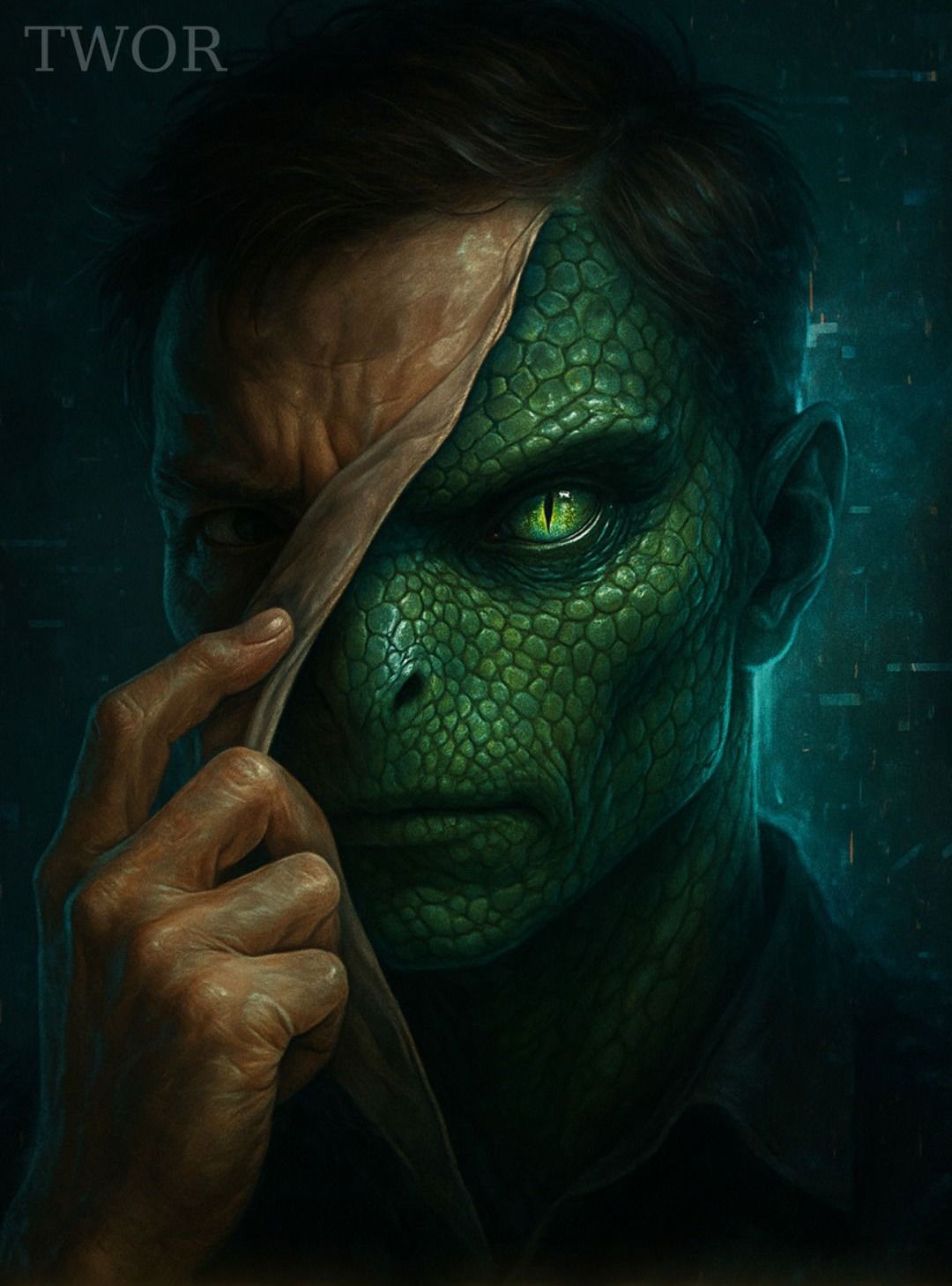
Sometimes, a person’s gaze makes us pause. They may show no sign of threat or hostility, yet their eyes linger too long on one point, their expression barely changes, or their reaction seems out of place. The sense of something unfamiliar can appear almost instantly, enough to bring up a word that has become familiar online: Reptilian.
Modern Reptilian theories take this in a direct sense: reptilian beings can take human form and live among humans. David Icke became one of the best-known figures to popularize the idea in the late twentieth century. Stories about pupils changing shape, faces seeming to shift for a moment, or “another presence” behind a human appearance have grown around it as well.
Reptiles, especially snakes, had already appeared throughout mythology and religion long before Reptilian became the name of a modern theory. Nagas in South Asian traditions take many forms, from powerful water beings to protectors; in Buddhism, the Naga Mucalinda shelters the Buddha. In Mesoamerica, feathered serpents appeared early in art and belief, later becoming strongly associated with Quetzalcoatl. In the Bible, the serpent in the Garden of Eden enters a story about knowledge, temptation, and crossing a forbidden boundary.
These figures come from different traditions and carry different meanings. Snakes have been linked with life, death, knowledge, danger, power, healing, instinct, and parts of human nature that are difficult to control.
Neuroscience once had a model that also used the reptile as part of its language. The triune brain model included what became widely known as the “reptilian brain,” placing it at the oldest, deepest level and linking it mainly to survival responses. Other parts above it were associated with emotion and more complex thought. Later research revised this picture because the brain does not work as three independent blocks. Responses to danger, emotion, and thought all involve many brain regions working together.
In everyday life, stress, defensiveness, or a sense of threat can still change a person’s face, gaze, and reactions quite noticeably. A moment like this may bring something “reptilian” to mind, especially when the familiar sense of connection in another person’s face suddenly seems to fade.
One person may trace that moment back to stress and the nervous system. Another may recognize an old serpent symbol. Reptilian theory takes it further and proposes another kind of being behind the human form.
It may begin with only a few seconds: we notice something, feel that it is unusual, and start looking for an explanation.
So what if what we see and hear is only a small part of what exists around us? Could something remain present in everyday life while staying outside the range of human perception?