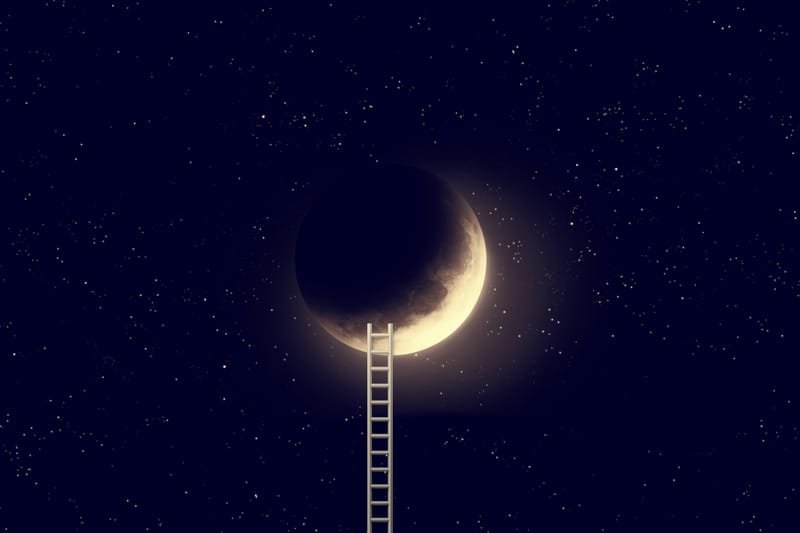
What dreams are made of
Dreams are where the inner world continues to move through images.
_______
As the body rests, memories, emotions, sensations, fears, desires, intuition,
and what has not yet been put into words can still come together.
They are rearranged into a different order,
forming the familiar yet strange scenes of dreams.
Three movements of sleep
Sleep is a time when activity in the outer world slows down, while memories, emotions, and the day’s experiences continue to be sorted. As the body rests, the mind may filter out what is no longer needed, reconnect scattered fragments, and ease emotions that still linger. During this process, three movements often overlap:
1
Clearing the noise
Small details, pressures, and traces of waking life begin to settle. Some may remain and reappear in dreams as images or situations.
2
Reconnecting memories
Past experiences are linked in new ways. Fragments that seem unrelated while awake may meet within the same dream scene.
3
Easing emotions
Lingering emotions begin to soften. What has not been fully felt or put into words may return in symbolic form.
The dream field
Dreams take shape where memory, emotion, sensation, and symbol meet. Familiar things may return in unfamiliar forms; dream imagery often follows emotional logic more than the usual order of waking life.
Why some dreams feel so real
During sleep, the body and emotions can still respond as if an event were actually happening.
That is why some dreams are remembered more like lived experiences than imagined stories.
The stronger the emotion, the longer the impression may remain after waking.
Why dreams use symbols
Dreams often condense memories, emotions, and context into images rather than direct explanation.
A single symbol can hold several shades of meaning at once, including things that are difficult to express in words.
A single symbol can hold several shades of meaning at once, including things that are difficult to express in words.
Dreaming as an interface
In dreams, memories, emotions, and what still feels unsettled can appear as places, people, or situations.
This allows what has not yet been put into words to take on a visible form.
From formation to reading
This page has explored how dreams take shape:
memories reconnect, lingering emotions carry over, and what has not yet found words becomes imagery.
The next step is to follow those traces—recurring images, feelings that remain after waking,
and connections between scenes—before assigning the dream a fixed meaning.
memories reconnect, lingering emotions carry over, and what has not yet found words becomes imagery.
The next step is to follow those traces—recurring images, feelings that remain after waking,
and connections between scenes—before assigning the dream a fixed meaning.