P4 | The auxiliary brain
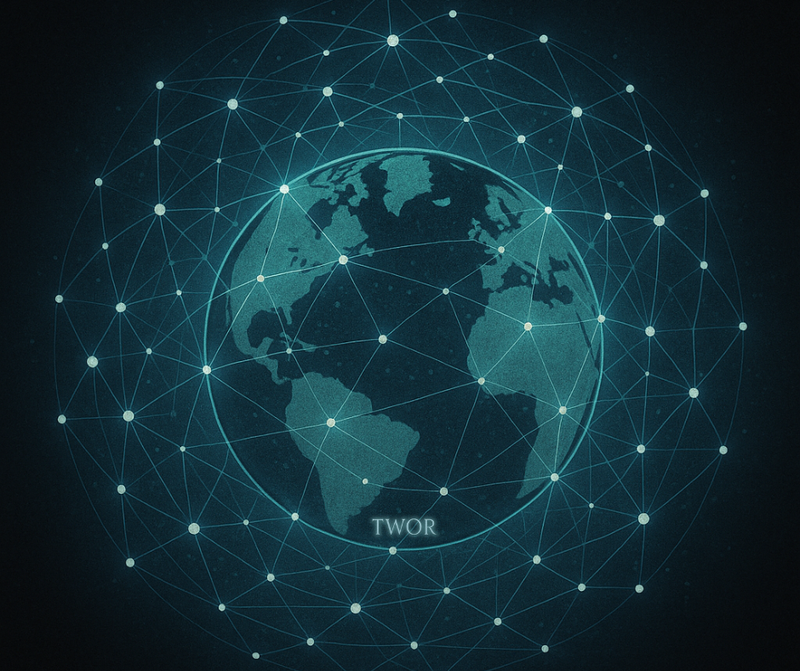
When the Internet emerged, humanity added a form of connection unlike anything that had existed before on Earth’s surface. Data can pass through multiple nodes, reroute when one path fails, be stored in one location, then appear somewhere else almost instantly. Humans designed this structure on a planet already filled with distributed networks of its own.
Nervous systems connect countless cells, roots and fungi form exchange networks underground, and schools of fish or flocks of birds coordinate movement across large numbers of individuals. Oceans and the atmosphere also connect regions thousands of kilometers apart through currents and circulation. The Internet added another kind of network to a world already full of interconnected systems.
Within Living Earth, the “auxiliary brain” begins with this network built by one species living on the planet. The Internet provides the connection; sensors, satellites, data archives, people, and processing systems give the wider network the ability to observe, remember, and respond.
A new network across the planet
The Internet operates through countless devices and connection points rather than a single center. A data packet may travel through several routes before reaching its destination, while millions of servers store and process different parts of the digital world. The network changes every day as new devices, users, and sources of data join it.
People have become part of that network as well. Every uploaded image, search, piece of code, location, or line of text adds data to a shared information environment. Data can be copied, sorted, linked, and transmitted at speeds that earlier communication networks could never reach.
The network has also expanded far beyond communication between people. Machines send data to other machines, sensors report environmental conditions, satellites transmit images back to Earth, and positioning systems continuously calculate location. A new informational layer now sits over physical processes that have been unfolding on the planet for far longer.
When Earth gains new points of observation
Earth-observing satellites track clouds, sea-surface temperature, ice, wildfires, soil moisture, the atmosphere, and many other changes. Weather radar, monitoring stations, ocean buoys, thermal sensors, and cameras add data from the surface. The Internet allows these scattered sources to send information to processing centers and deliver the results to people far away.
A wildfire can be detected from orbit. A storm crossing the ocean can be followed through several kinds of sensors. Changes in forests, ice, or coastlines can be compared across decades of satellite imagery. Humanity can now observe the state of the planet with a reach and speed unavailable to earlier generations.
In the Living Earth metaphor, this sensor network resembles an added sensory system spread across the planetary body. The observing is done by a species living on Earth, through a system broad enough to record many surface changes close to the time they occur.
Memory outside the body
Observation is one part of the process. The data is also stored.
Satellite imagery, maps, climate records, geological data, scientific research, and countless traces of human activity continue to accumulate in digital archives. Landsat has recorded Earth’s surface for more than half a century; long-term datasets like these allow a forest, a city, or an ice-covered region today to be compared with the same place decades earlier.
The Internet also extends human memory beyond the biological body. Books, images, sound, maps, history, formulas, scientific data, and conversations can persist long after the moment in which they were created. Part of civilization’s memory has gradually moved into storage systems outside the human brain.
Within the idea of an “auxiliary brain,” this is the part that comes closest to memory. The digital archive belongs to the living beings building it: an expanding record of themselves and of the world they inhabit.
When data returns to everyday life
Data entering the network is processed and then feeds back into the physical world. Weather forecasts alter travel and production plans. Satellite data supports the monitoring of wildfires, droughts, and floods. Maps, navigation systems, and traffic information continuously influence how people move through space.
In the social layer of the Internet, data also returns through search results, rankings, recommendations, and sharing, influencing attention and behavior. Those responses generate more data for the next round of processing.
AI extends this processing capacity further. Volumes of data far beyond the reach of a single person can be searched, compared, recognized, and synthesized by machines. A network once used mainly to transmit information now also contains systems capable of processing it at enormous scale.
The “auxiliary brain” extends beyond the Internet itself. It includes observation points directed at the planet, a global transmission infrastructure, digital memory stores, and the humans and machines processing the data that moves through them. Information about Earth is collected, stored, transformed, and returned to influence how one species acts on the planet it inhabits.
The Internet appeared very late in Earth’s history. Within only a few decades, it connected billions of people to a shared data network and made events in one part of the world visible almost instantly in another. A wildfire, an earthquake, a war, or a scientific discovery can now become part of the shared experience of people living half a world apart.
Source notes
- NASA Earthdata — Earth Science Data Systems
https://www.earthdata.nasa.gov/ - NASA Earth Observatory
https://earthobservatory.nasa.gov/ - NASA / USGS — Landsat Science
https://landsat.gsfc.nasa.gov/ - NOAA NESDIS — National Environmental Satellite, Data, and Information Service
https://www.nesdis.noaa.gov/ - Internet Society — A Brief History of the Internet
https://www.internetsociety.org/internet/history-internet/brief-history-internet/