P2 | The planetary brain
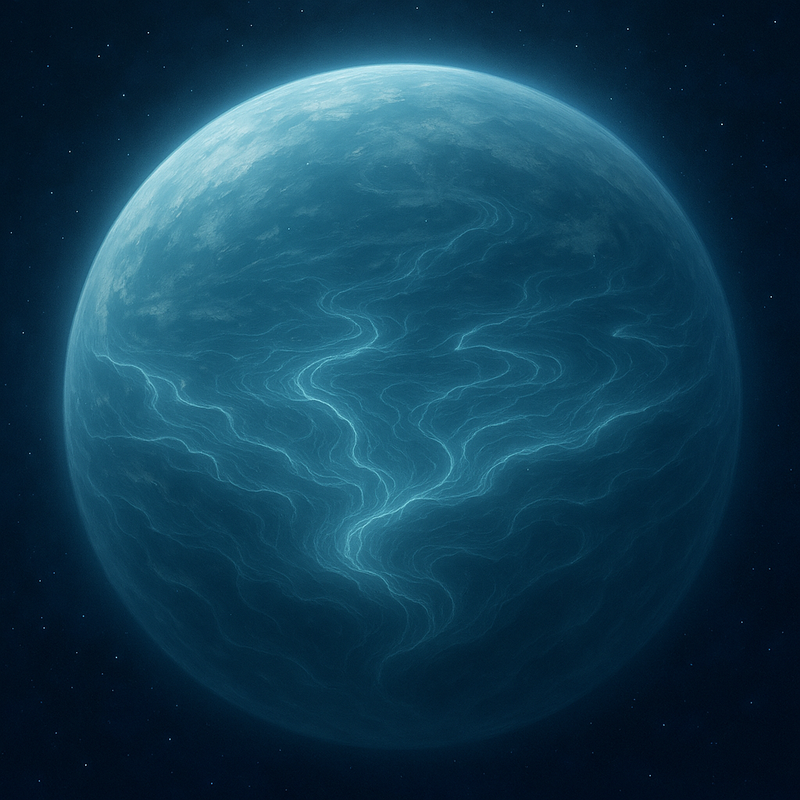
Forests are often called the lungs of Earth. The ocean absorbs, stores, and transports enormous amounts of energy while carrying carbon, nutrients, and other materials across the planet.
In Living Earth and New Age imagery, the ocean often takes the form of a “liquid brain.” It constantly receives influences from the atmosphere, land, ice, and living systems; retains part of them, transforms them within the water, then carries their effects across great distances through ocean currents.
A liquid neural network
Ocean water is always moving. Winds drive surface currents, Earth’s rotation bends their paths, while temperature and salinity help shape circulation in deeper waters. Seafloor topography, coastlines, and tides add further complexity to this vast network.
Major currents transport heat across thousands of kilometers and strongly influence regional climates. Warm water moves from the tropics toward higher latitudes, while colder water continues through other circulation pathways. The ocean stores energy and redistributes it on a planetary scale.
Tides add another recurring rhythm under the gravitational pull of the Moon and the Sun. Winds, differences in temperature and salinity, gravity, and topography continually shape the way water masses change direction, sink, rise, and circulate throughout the ocean.
These currents carry heat, salt, carbon, nutrients, and the physical properties of water masses across immense distances. A disturbance in one region can travel with the circulation and reach areas thousands of kilometers away before gradually blending into the wider ocean.
Water masses also change along the way. They exchange heat with the atmosphere, mix with waters of different temperatures and salinities, exchange material, and continually alter their physical properties. An influence entering the ocean may later appear somewhere else, at another time, in a form already changed by the journey.
The ocean’s memory
Ocean memory describes the ability of an ocean state to persist long enough to influence what happens next. Water has a high heat capacity, ocean temperatures change more slowly than the air above them, and thermal anomalies can persist for months, years, or longer depending on the region and process involved.
Some traces can temporarily disappear from the surface and later return. An unusually warm or cold body of water may remain below after seasonal changes reshape the upper ocean, then reappear when mixing conditions bring it back toward the surface. A previous state can therefore continue to influence the following season.
Ocean memory differs from the idea of water memory often found in New Age thought. In climate science, temperature, salinity, the position of water masses, and other persistent physical properties can continue shaping later ocean states.
The ocean also stores heat and carbon over very long periods. Material can descend into deeper waters, travel through ocean circulation, and return closer to the surface years or decades later. The sea carries traces of states that have passed through it.
When the “planetary brain” is overloaded
Today, the ocean is absorbing an enormous amount of excess heat. More than 90% of the excess heat accumulated in the climate system has entered the ocean.
That heat is stored and redistributed by ocean currents, warming the sea, contributing to sea-level rise, and changing conditions for many ecosystems. Heat accumulated today can continue influencing climate for years to come.
The ocean and atmosphere continually affect each other. The sea transfers heat and moisture into the air; winds, rainfall, and heat exchange from the atmosphere alter the ocean surface in return. Changes in the ocean can reshape atmospheric conditions, which then feed back into the sea. El Niño and La Niña are familiar phases of this interaction, as conditions in the tropical Pacific and the atmosphere above it shift together and influence weather far beyond the region.
The ocean receives influences, retains part of them within its waters, transforms them through circulation, and returns their effects to the atmosphere and living systems. Together with ocean memory, this means the state of the sea today carries traces of what happened before while also helping shape what comes next.
Within Living Earth, the idea of a “planetary brain” grows from this chain of activity. The ocean receives what enters it, transforms those influences as they move, preserves traces of earlier states, and carries their effects into other regions and other moments. The entire process unfolds across the ocean through countless currents and water masses.
Source notes
- NASA / JPL — Ocean Circulation
https://podaac.jpl.nasa.gov/OceanCurrentsCirculation - NASA Science — Ocean and Climate
https://science.nasa.gov/earth/climate-change/ocean-and-climate/ - NOAA Climate.gov — Climate Change: Ocean Heat Content
https://www.climate.gov/news-features/understanding-climate/climate-change-ocean-heat-content - Shi et al., Science Advances — Global decline in ocean memory over the 21st century
https://www.science.org/doi/10.1126/sciadv.abm3468 - NOAA Ocean Service — Tides and Currents
https://oceanservice.noaa.gov/navigation/tidesandcurrents/ - NOAA PMEL — El Niño / La Niña
https://www.pmel.noaa.gov/elnino/